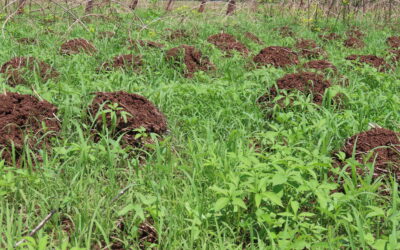

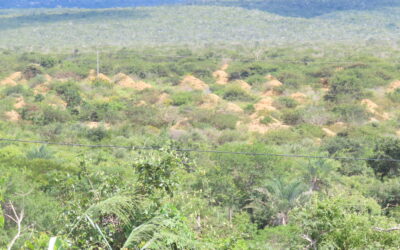
Why do Latossolos occur in Brazil’s Northeast semiarid region? Drawing on the paper by Grace Bungenstab Alves, this text shows how reading soil and relief together reveals both legacies from wetter phases and more recent landscape reorganization. Two examples illustrate the argument: Vertisols with Holocene OSL ages and the Latossolo–Planossolo transition. Together, they highlight that separate inventories of soils and landforms do not explain processes, and that transition zones often hold the key evidence for interpretation.
Vertisols
Decoding Luminescence Ages through Pedogenesis: Vertisols under Investigation at NWLDW 2025
This work, presented at NWLDW 2025, investigates the luminescence ages of a Vertisol from the Rio do Peixe Sedimentary Basin (PB, Brazil), integrating grain size, micromorphological, and weathering analyses. The results indicate that part of the dated material was internally mobilized by pedogenetic processes such as pedoturbation, challenging strictly depositional interpretations. The study reinforces the role of soil as an active record of the landscape and highlights the importance of pedogeomorphological approaches in tropical semiarid environments.