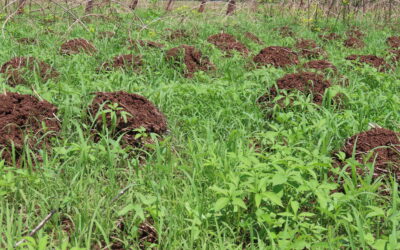

Landscape
Soil profiles: a window into soil genesis, degradation, and landscape memory

Soil profiles: a window into soil genesis, degradation, and landscape memory

A newly published article in the European Journal of Soil Science, with the participation of Grace B. Alves, argues that the soil profile remains an indispensable tool for understanding soil genesis, functioning, and degradation. The paper shows that describing horizons, layers, and morphological features allows researchers to interpret processes that cannot be captured by surface-only sampling. This makes soil profile description essential for sustainable land management, environmental conservation, and the reconstruction of landscape history. The article also warns about the weakening of training in pedology and advocates for the integration of field observation, sensors, artificial intelligence, and digital soil mapping.

Decoding Luminescence Ages through Pedogenesis: Vertisols under Investigation at NWLDW 2025

Decoding Luminescence Ages through Pedogenesis: Vertisols under Investigation at NWLDW 2025

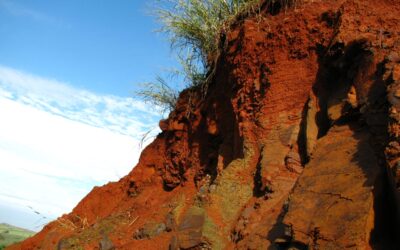
This work, presented at NWLDW 2025, investigates the luminescence ages of a Vertisol from the Rio do Peixe Sedimentary Basin (PB, Brazil), integrating grain size, micromorphological, and weathering analyses. The results indicate that part of the dated material was internally mobilized by pedogenetic processes such as pedoturbation, challenging strictly depositional interpretations. The study reinforces the role of soil as an active record of the landscape and highlights the importance of pedogeomorphological approaches in tropical semiarid environments.

Trapped in the forest: how soil shapes an unusual grassland in the Atlantic Rainforest

Trapped in the forest: how soil shapes an unusual grassland in the Atlantic Rainforest

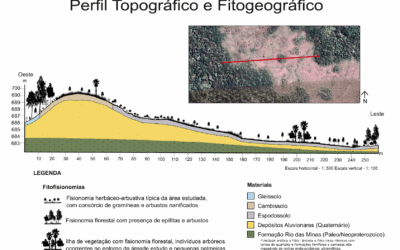
This study investigates the Campo do Veludo, an isolated grassland formation within the Atlantic Forest in southern São Paulo. By integrating soil, topographic, and vegetation data, the research shows that shallow, acidic, and poorly drained Spodosols shape the landscape structure and constrain forest expansion, resulting in a biogeographic enclave of exception. The authors also explore possible connections with muçununga formations, broadening the discussion on landscape diversity in humid tropical regions.