

 Português
  English
The COLAPSO Research Group participated in the New World Luminescence Dating Workshop 2025 (NWLDW), held at the Institute of Geosciences of the University of São Paulo (USP), with the presentation of the work “Decoding luminescence ages through pedogenesis: Vertisols in a semiarid sedimentary basin.”
The study was conducted by Amanda Dias dos Reis (PhD student, UFBA) and Matheus Santos Silva Figueiredo (Master’s student, UFBA), both advised by Grace Bungenstab Alves, and included the collaboration of Sheila Furquim and Fabiano Pupim. The research also received support from a grant awarded by the Brazilian Geomorphology Union (UGB).
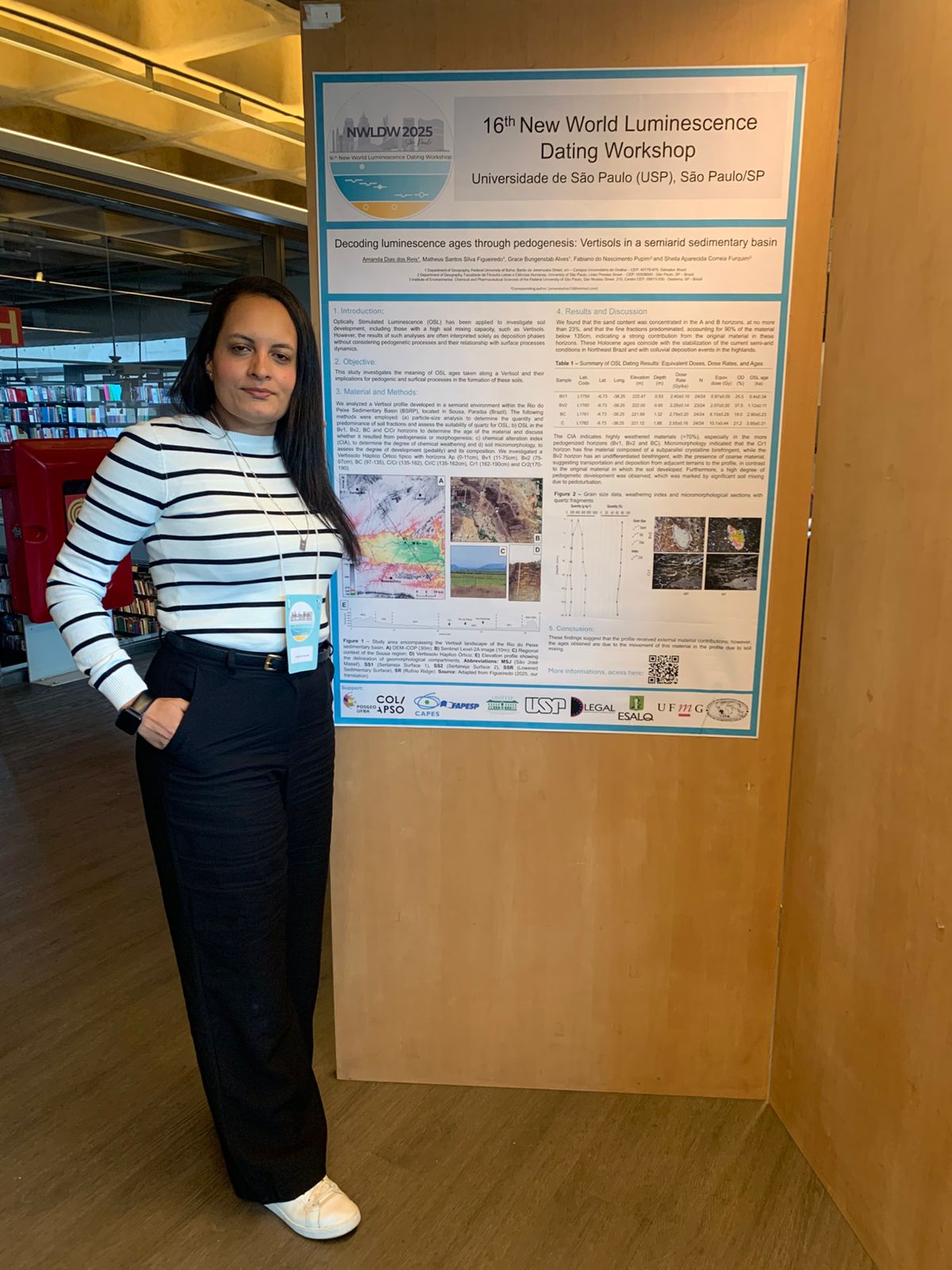
Amanda Dias dos Reis, a master’s student affiliated with the COLAPSO Research Group, during the presentation of the work “Decoding luminescence ages through pedogenesis: Vertisols in a semiarid sedimentary basin” at NWLDW 2025, held at the Institute of Geosciences (USP).
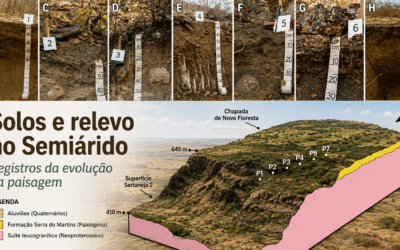
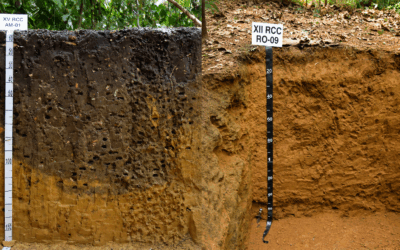
The research aims to understand how ages obtained through Optically Stimulated Luminescence (OSL) in Vertisols reflect not only depositional events, but primarily intense pedogenetic processes such as pedoturbation. The studied soil profile is located in the Rio do Peixe Sedimentary Basin, in the state of Paraíba (Brazil), and was analyzed based on grain size distribution, micromorphological features, weathering indices, and OSL ages across different horizons.
The results indicate that part of the dated material shows no signs of sedimentation, suggesting that it was internally mobilized within the profile, reflecting mixing processes typical of Vertisols. The Holocene ages coincide with the stabilization of current semiarid conditions in Northeast Brazil and with colluvial events in the higher areas of the landscape.
This study reinforces the importance of integrating soil and landscape analyses when interpreting luminescence ages—an approach still rarely explored in tropical semiarid environments.
📷 Poster presented at NWLDW 2025:
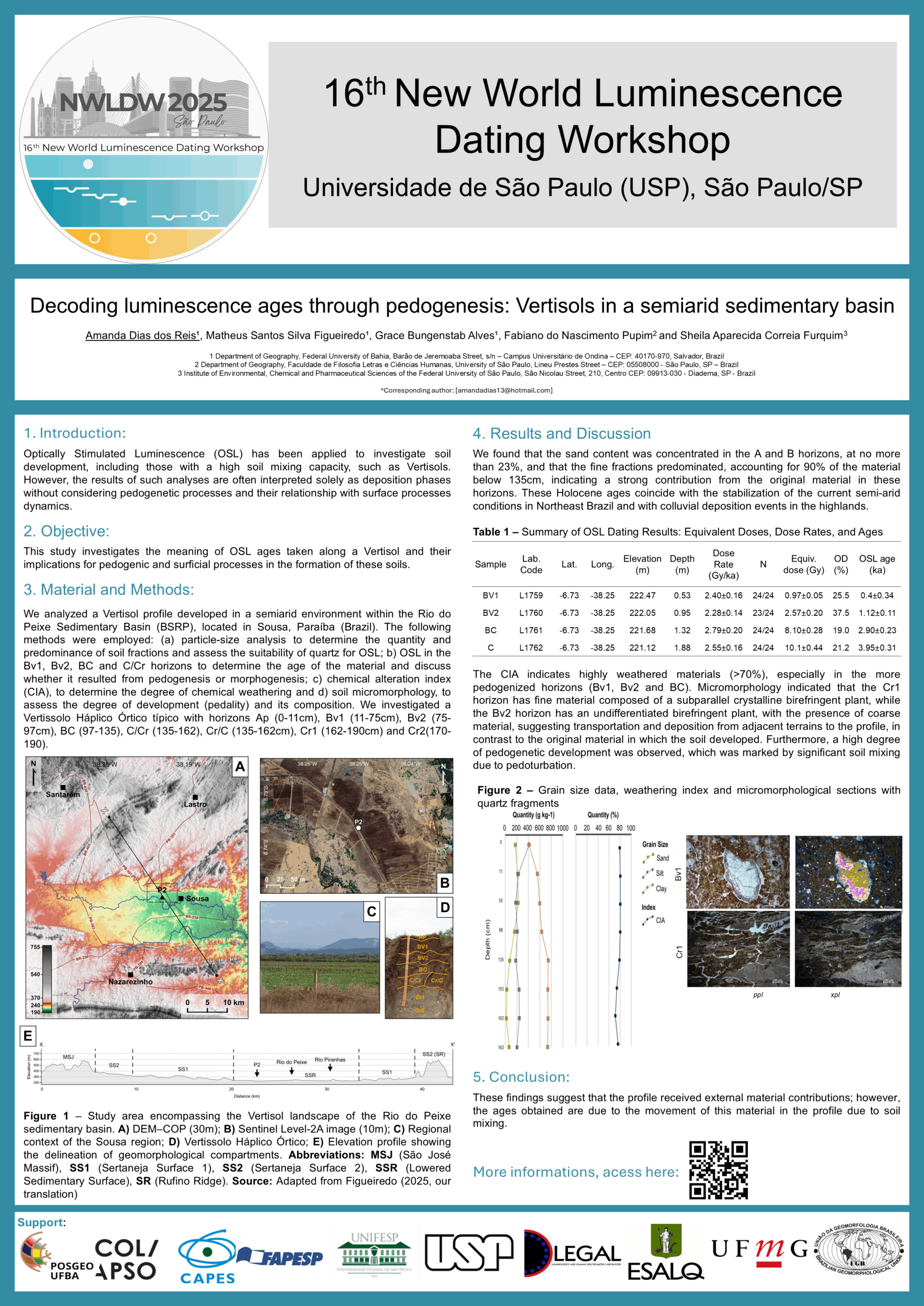
“Decoding luminescence ages through pedogenesis: Vertisols in a semiarid sedimentary basin.” The study investigates how luminescence ages in Vertisols reflect pedogenetic and depositional dynamics in the Rio do Peixe Sedimentary Basin (PB, Brazil).
Authors: Amanda Dias dos Reis, Matheus Santos Silva Figueiredo, Grace Bungenstab Alves, Fabiano N. Pupim, and Sheila A. C. Furquim
Supported by: COLAPSO Research Group, UGB, CAPES, FAPESP, and institutional partners.
The participation in NWLDW 2025 highlights COLAPSO’s commitment to innovative approaches in reading geological time in tropical environments, with soils as key records of past and present landscape processes.