
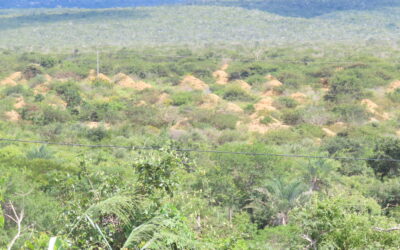
Why do Latossolos occur in Brazil’s Northeast semiarid region? Drawing on the paper by Grace Bungenstab Alves, this text shows how reading soil and relief together reveals both legacies from wetter phases and more recent landscape reorganization. Two examples illustrate the argument: Vertisols with Holocene OSL ages and the Latossolo–Planossolo transition. Together, they highlight that separate inventories of soils and landforms do not explain processes, and that transition zones often hold the key evidence for interpretation.
geomorphology
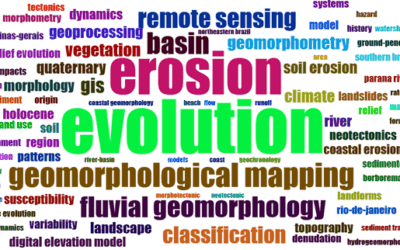
Revista Brasileira de Geomorfologia (Brazilian Journal of Geomorphology): 25 Years of Evolution and New Directions in Geomorphological Research
Bibliometric analysis reveals 25 years of evolution of the Brazilian Journal of Geomorphology, highlighting the consolidation of national scientific production, the growth of international networks, and the challenges of expanding emerging subfields such as Geodiversity, Geochronology, and Geomorphological Heritage.
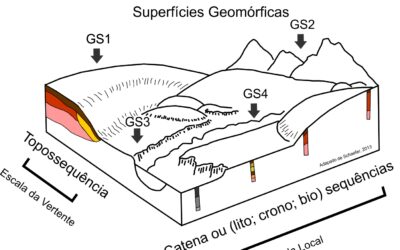
Toposequences: What Are We Really Studying?
This post presents a critical review of the concept of toposequence in soil science. Based on a bibliometric analysis, the article identifies three main approaches: geomorphic surfaces, catena, and toposequence. It also proposes more precise criteria for the use of toposequence in pedogeomorphological studies.