
Pedology
Soil profiles: a window into soil genesis, degradation, and landscape memory

Soil profiles: a window into soil genesis, degradation, and landscape memory

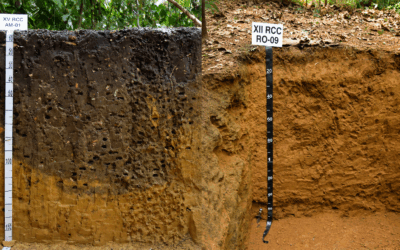
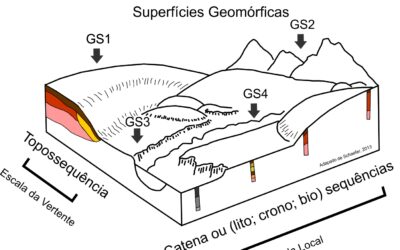
A newly published article in the European Journal of Soil Science, with the participation of Grace B. Alves, argues that the soil profile remains an indispensable tool for understanding soil genesis, functioning, and degradation. The paper shows that describing horizons, layers, and morphological features allows researchers to interpret processes that cannot be captured by surface-only sampling. This makes soil profile description essential for sustainable land management, environmental conservation, and the reconstruction of landscape history. The article also warns about the weakening of training in pedology and advocates for the integration of field observation, sensors, artificial intelligence, and digital soil mapping.

Latossolos (Ferralsols) in Brazil’s Northeast semiarid region: what does this “contradiction” reveal?

Latossolos (Ferralsols) in Brazil’s Northeast semiarid region: what does this “contradiction” reveal?

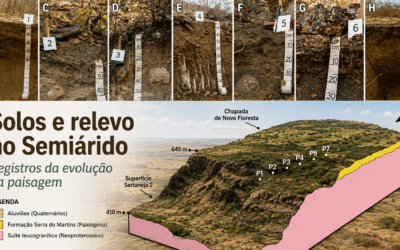
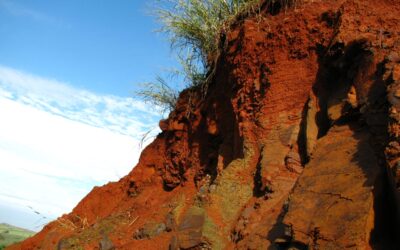
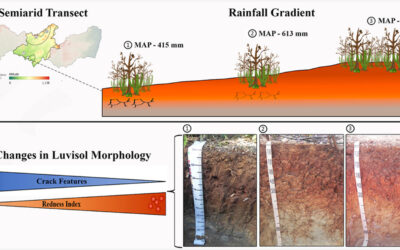
Why do Latossolos occur in Brazil’s Northeast semiarid region? Drawing on the paper by Grace Bungenstab Alves, this text shows how reading soil and relief together reveals both legacies from wetter phases and more recent landscape reorganization. Two examples illustrate the argument: Vertisols with Holocene OSL ages and the Latossolo–Planossolo transition. Together, they highlight that separate inventories of soils and landforms do not explain processes, and that transition zones often hold the key evidence for interpretation.

Trapped in the forest: how soil shapes an unusual grassland in the Atlantic Rainforest

Trapped in the forest: how soil shapes an unusual grassland in the Atlantic Rainforest

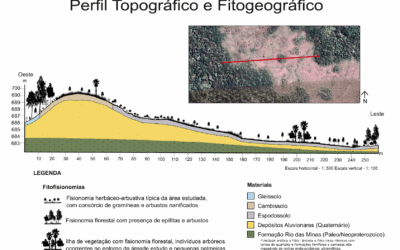
This study investigates the Campo do Veludo, an isolated grassland formation within the Atlantic Forest in southern São Paulo. By integrating soil, topographic, and vegetation data, the research shows that shallow, acidic, and poorly drained Spodosols shape the landscape structure and constrain forest expansion, resulting in a biogeographic enclave of exception. The authors also explore possible connections with muçununga formations, broadening the discussion on landscape diversity in humid tropical regions.